
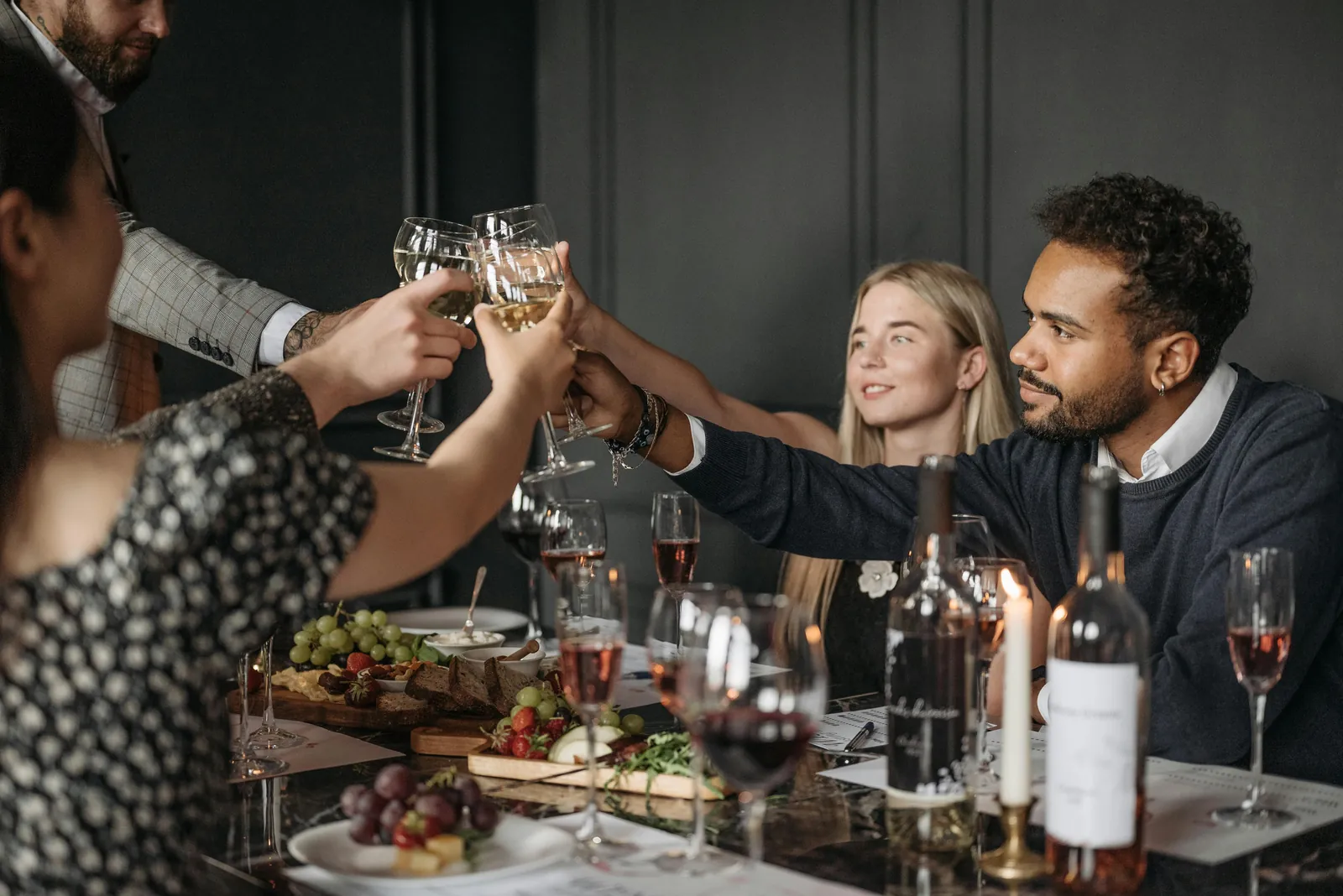
Long Island venues are bigger than they used to be. Hamptons catering is sharper. New York City guests are used to restaurants where the wine list is curated, not assumed. A sommelier on a wedding team is no longer a novelty in this region. It is quietly becoming the thing that separates a good wedding wine experience from a generic one.
A lot of couples are planning at venues that already do a great job. Long Island clubs, North Fork tasting rooms, East End restaurants. These are not venues where wine is missing. They are venues where wine could be more.
Why this matters on Long Island and in the Hamptons.
A wedding sommelier on Long Island does two things the venue typically does not:
First, the wine is curated to you. Not to the house list. To you. Your tastes, your preferences, what you love featured prominently, what you hate removed.
Second, the experience is continuous. One person from welcome toast to last call, watching how the wine lands.
If you are planning at one of these venues and the team does not already include a dedicated sommelier, it is worth asking whether an outside sommelier vendor is available to add-on. Many venues welcome it, because it elevates their own package at no cost to them.
Before the wedding:
The real work starts months out.
A sommelier meets with the couple and learns two things: what you drink, and what you want your guests to feel. Those are different questions. Your favorite Tuesday red is not always the right pick for 120 guests standing under a tent in July.
Then the pairing starts. Not abstract pairing. Specific to your menu, your season, your venue, and the time your speeches land. A glass of something crisp before the first course works differently than the same glass after a toast.
A good sommelier also handles the logistics you should not have to think about. Case counts. Serving order. Backup bottles for the caterer. What gets chilled, when, and how.
By the time you arrive at the rehearsal dinner, the wine list is locked, the bottles have arrived, and everything is staged for service. You do not get a surprise call about missing bottles the day before your wedding.
During the wedding:
The cocktail hour is where the gap between "wedding with wine" and "wedding with a sommelier" first shows up.
The difference is not that one person is pouring better. The difference is that somebody decided, weeks ago, which bottle meets your couple at the door as they step out of the ceremony.
During dinner, the sommelier is watching the room. Are the reds opening? Is the white holding its temperature? Is the table by the window drinking at the same rhythm as the rest of the room? Do the bride and groom need a refill?
Most guests will not name any of this. They will only remember that the wine was right, their glasses were never empty, and they felt catered to.
After dinner:
This is where weddings often lose their wine moment.
The speeches land. The dance floor opens. Somebody starts asking for "just a beer" because the Cabernet that showed up at cocktail hour is still in a half-empty glass three hours later.
A sommelier plans the arc. A lighter pour for dancing. A late-night bottle for the grandparents who want to sit and talk. A closing glass for the couple that becomes a small ritual.
The difference is not effort. It is that someone thought about it. The glass is in someone's hand during the ceremony, the toasts, the first dance, and the last song. The experience in it touches the whole night.
Three questions worth asking before you hire a wedding sommelier.
Does a sommelier work with a tight wine budget too?
Yes. The budget that matters is the couple's, not the wedding's. A sommelier can work within a small wine budget or a large one. What changes is the selection, not the experience. Ask any sommelier you interview how they would approach your specific number. The ones that balk at the low number don't know what they're doing; the ones that ogle at a high number won't know how to make the most of it.
What makes a sommelier different from the bar staff?
A sommelier is certified and trained specifically in wine. The job is the experience, end to end: selection, service, pacing. Bar staff pour what is set in front of them. A sommelier decides what gets set in front of them.
When in the planning should we bring a sommelier in?
Three to six months out, right after the caterer is confirmed and before stationery goes to print, is the best window. Bring a sommelier in after the menu is locked and the wine gets to fit the food. Bring one in earlier and the food and wine get built together. The earlier window is where the biggest decisions, like a menu swap to meet a wine, actually happen.
Your wedding is the one night where the small decisions get amplified. The wine is one of those decisions. See that it gets the proper care it deserves and you'll be well taken-care of.